jeudi 14 novembre 2019
Tarantino a un plan
Tarantino était reçu ce 13 novembre par l'académie britannique du cinéma, la BAFTA, pour un Q&A revenant sur sa carrière. A cette occasion, les fans ont pu poser leurs questions. Il a déclaré être en pleine frénésie d'écriture. Après OUATIH, il a écrit une pièce, cinq épisodes de Bounty Law et le début d'un roman. L'écriture du dit roman devrait l'emmener jusqu'en mars prochain. Il a l'intention de donner vie à chacun de ces projets avant de commencer à se pencher sur son 10ème et dernier film.
“So I finished ‘Once Upon a Time in Hollywood,’ finished that script, put it aside, and then I wrote a play. And then I wrote a five-episode TV series. And right now I’m writing a book and I’m hoping that I’ll be finished in three months. So the idea will be hopefully by March maybe I’ll be finished with the book – and then, theoretically, maybe I’ll do the play, and then theoretically I’ll do the TV show, and then by that point I’ll be thinking maybe what I’ll do for the 10th movie.”
jeudi 7 novembre 2019
OUATIH: que devient Rick Dalton après le film?
Les personnages de Quentin Tarantino continuent de vivre dans son esprit, même quand le film est terminé. Le réalisateur a évoqué le destin de Rick Dalton (joué par Leonardo DiCaprio) après Once Upon a Time… in Hollywood durant le podcast The Margaret Cho : « Sa carrière pourrait se poursuivre de différentes façons. Si vous pensez qu’il représente George Maharis ça ira dans un sens, et si pour vous il est Ty Hardin ça ira dans un autre. C’est un mélange des deux. À la fin des années 70-début 80, ces premiers rôles machos de la télévision des années 50 et 60 sont revenus aux séries, mais cette fois dans des rôles de vieux flics, de chefs de jeunes policiers qu’ils envoyaient en mission. C’est ce qui pourrait se passer pour Rick, même s’il avait plus de succès dans les années 70 que je ne l’envisage, parce que c’est arrivé à des tas de types de ce genre ».
Quentin Tarantino cite notamment Earl Holliman, Jack Kelly (Maverick), et Vic Morrow (Mannix, Magnum). « Je dirais que je verrais bien Rick Dalton devenir l’un de ces gars », conclut-il.
Source: Première
OUATIH: l'impro de Di Caprio
Oublier son texte, tous les acteurs l’ont expérimenté et ont fait avec. Mais pour Rick Dalton, comédien de séries télévisées western incarné par Leonardo DiCaprio, c’est une tragédie. Après avoir ressenti une vive humiliation en public sur le tournage de Lancer, l’ancienne star du show Bounty Law s’enferme dans sa caravane pour se lâcher et s’insulter copieusement, espérant remettre de l’ordre dans ses idées et se reprendre. Une séquence importante, marquant un tournant dans la psychologie du personnage. Pourtant, d’après son interprète et le réalisateur Quentin Tarantino, ce coup de colère n’était absolument pas prévu dans le scénario, comme ils l’ont expliqué dans des propos rapportés par CinemaBlend.
"Comme ce n’était pas dans le script, on n’a jamais cherché à la répéter," affirme Tarantino, avant de rajouter : "C’est une idée qui nous est venue sur le plateau, parce qu’il y avait vraiment un truc à exploiter d’après Leo. À un moment, il est venu me voir et m’a sorti "Écoute, il faut que je foire pendant la séquence de Lancer, d’accord ? À ce moment-là, il faudrait que ça provoque une vraie crise existentielle." Ma première réaction, ça a été de lui dire : "Attends, tu veux foirer ma séquence de western ? C’est mon western, tu piges ? J’essaie de rajouter du putain de western dans ce film au moment où les gens ne s’y attendent pas. Alors viens pas me foirer ça !""
Après délibérations avec son acteur, le réalisateur a accepté de faire deux tentatives : une scène dans laquelle Rick Dalton ne se raterait pas, puis une avec l’oubli de texte. C’est finalement cette dernière qui a été retenue, après avoir émerveillé Tarantino, la trouvant "géniale". Mais ce changement de plan impliquant forcément des différences avec le scénario, il a fallu ajouter un nouveau passage : la remise en question de Dalton dans sa caravane. "J’ai dit à Leo : "Ok, maintenant il va nous falloir un peu plus que ça si on veut vraiment construire quelque chose… tu vas avoir ton duel, mais ce sera avec toi-même pendant une pause sur le plateau de Lancer." Je le lui ai dit comme ça, et c’est comme ça qu’on a tourné."
Un seul angle de caméra, Leonardo DiCaprio dans sa caravane s’en prenant à lui-même et se remettant en question, furieux après s’être trompé devant l’équipe technique de la série western… d’apparence simple, la séquence a pourtant été un vrai défi pour l’acteur, pris au dépourvu d’après Tarantino : "Il m’a demandé "Qu’est-ce que je devrais dire ?" Alors j’ai proposé : "Tu devrais improviser. Je te filerai des idées." Et je lui ai donné des pistes sur des choses qui pourraient obséder Rick Dalton et le faire péter un câble : son collègue Jim Stacy, la gamine... Mais il l’a fait à sa sauce. Et quand il commençait à manquer d’inspiration, je lui glissais des indications. Pour moi, aussi forte que soit la scène, la chose la plus touchante dans sa création, c’était la nervosité de Leo ! Je veux dire, je ne l’avais jamais vu aussi mal à l’aise que ce jour-là."
Once Upon a time… in Hollywood est sorti cet été au cinéma et fait partie des quatre meilleurs films au box-office français de Quentin Tarantino : le film a cumulé 2,6 millions d’entrées, juste derrière les 2,8 millions de Pulp Fiction et Inglourious Basterds.
Source: Première
lundi 4 novembre 2019
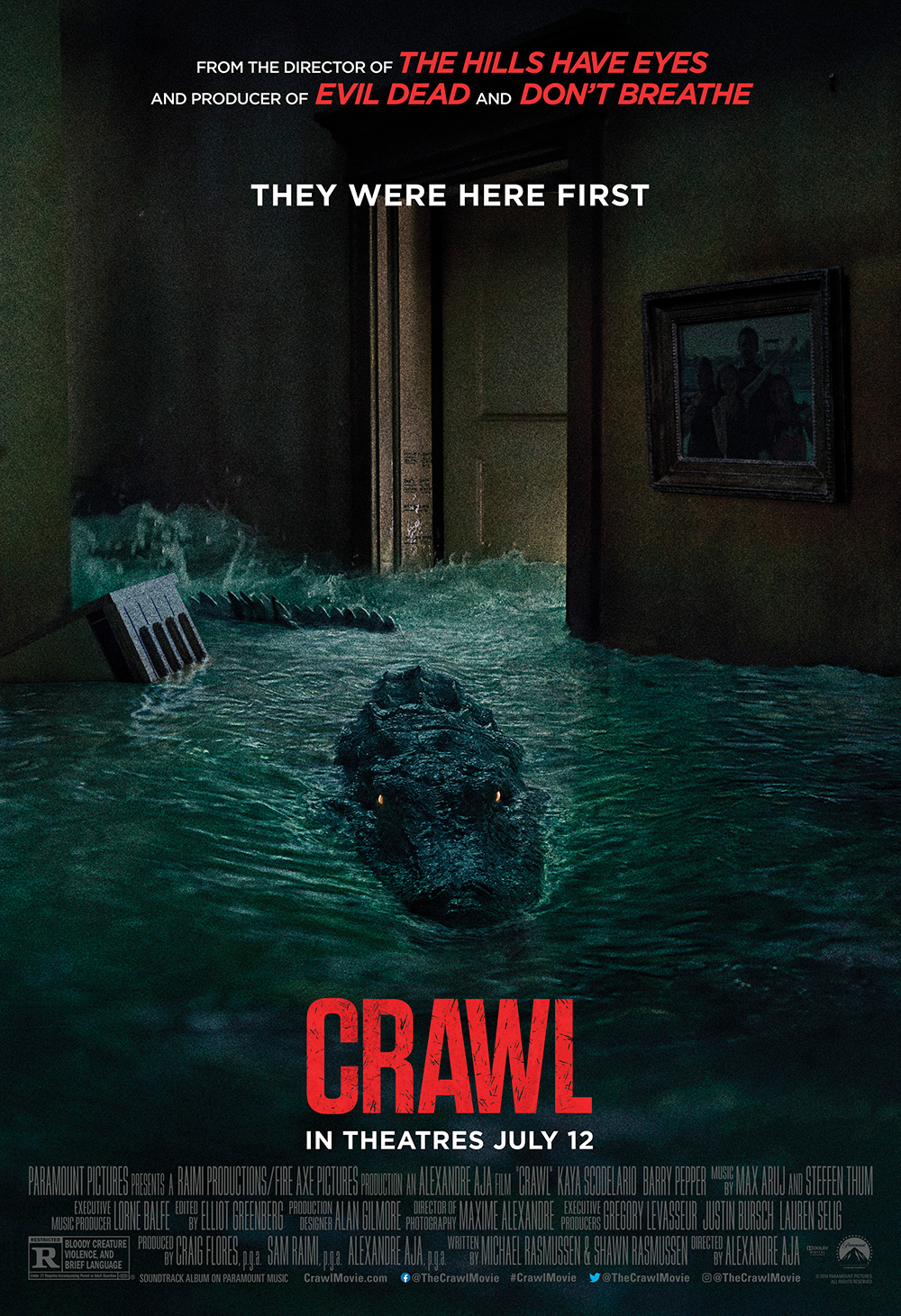
Crawl, meilleur film de 2019 pour QT
Tarantino est toujours consulté et/ou donne souvent son avis sur ce qu'il a vu, ce qu'il a aimé, ce qu'il faut voir, à grand renfort de classement par genre ou par année d'exploitation. S'il reconnaît avoir vu peu de film cette année à cause du tournage, du montage et de la promo de Once Upon A Time In... Hollywood, il vote pour le Crawl d'Alexandre Aja, petite série B de genre efficace. Des crocos dans le salon, à voir absolument.
dimanche 3 novembre 2019
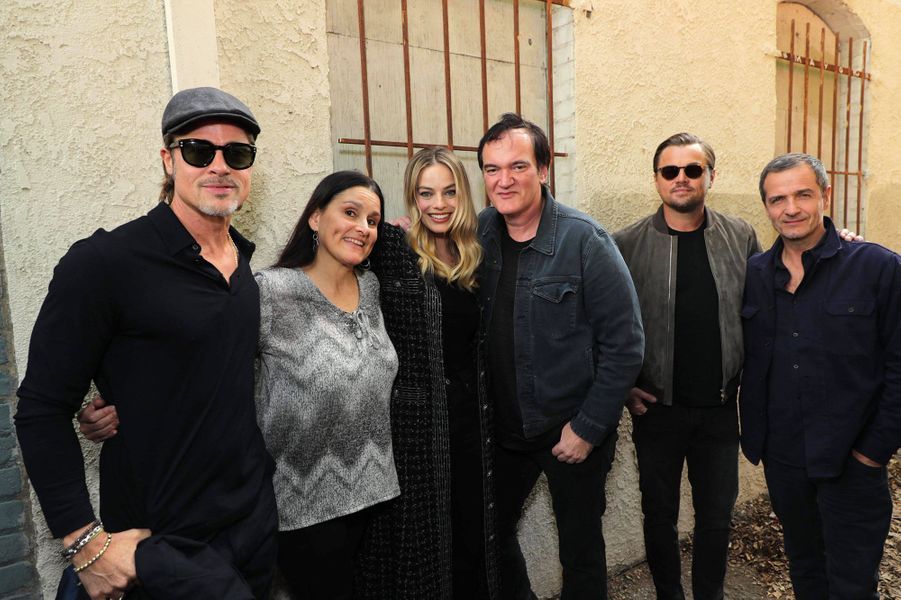
Q&A with Tarantino, Pitt, Di Caprio and Robbie
One of the most memorable moments in Once Upon A Time in Hollywood is Rick Dalton's (played by Leonardo DiCaprio) frantic meltdown in his trailer after he forgets his lines while shooting a pilot for western series Lancer. As it turns out, that scene was not in the original script, and was added by Quentin Tarantino at DiCaprio's behest.
The star told the writer-director, "I need to fuck up during the Lancer sequence, and when I fuck up during the Lancer sequence, I need to have a real crisis of conscious about it and I have to come back from it in some way," Tarantino remembered at a post-screening Q&A in Los Angeles on Sunday. "My response was, 'You're going to fuck up my Lancer sequence?! That's my western! I get two-for-one in this movie, I snuck a western in here while no one was fucking looking!'"
To appease both parties, Tarantino shot the scene both with the forgotten lines and without, deciding that "with the fuck up, it was just so amazing that of course we were going to use it," and then went about crafting the trailer tantrum, deciding to mostly leave it up to DiCaprio to improvise. The director wanted to do three continuous takes with DiCaprio in crisis, and planned to cut together the best bits — he threw out topics to his star but DiCaprio was left to do the rest. For example, Tarantino would say, "Get pissed off about Jim Stacy," and DiCaprio would respond, "Oh that fucking Jim Stacy, just sitting up there watching me, thinking he's so fucking hot, he wouldn't be a wrangler on my show." He director laughed remembering, "the cutest part was how nervous he was to do it, I've never seen him so nervous."
The Q&A, which featured Tarantino, DiCaprio, Brad Pitt and Margot Robbie, was held at Tarantino's New Beverly Cinema theater, and was part of a nationwide event where the (phone-free) moderated discussion was live-streamed into select theaters across the country. Much of the conversation revolved around Tarantino's unique filmmaking process, which included giving DiCaprio a rigorous film education and transforming current-day Los Angeles into the 1969 version of the city.
Noting how nothing in the film uses CGI or green screens, DiCaprio said, "It's like nostalgia within nostalgia, because we're doing a film about Hollywood in 1969, and then we're also doing a film that is done the way they do it in 1969," while Robbie added, "I don't think I've ever felt so transported as I did on Quentin's set." Part of that, she said, was due to Tarantino's no-phones-on-set rule, which prompted Pitt to share an "epic" story from working with the director on Inglourious Basterds.
"You have to check your phone in —there are no phones, this is sacred ground —and one went off in between takes and you would've thought someone went into the Sistine Chapel and took a shit," Pitt joked. "Not only did production come to a grinding halt —and no one would cop to it, even though we knew the general area —Quentin sent us home for the rest of the day and we had the afternoon off to think about we had done."
"I ask you for one thing, and if you have no more respect for me than that, then go home," Tarantino said in justifying the situation, while Pitt mic-dropped in response.
Once Upon A Time in Hollywood, which follows the lives of fading western TV star Dalton and his stuntman Cliff Booth (Pitt), all while navigating a changing Hollywood and the arrival of the Manson Family, also features many A-list actors in minor roles, including Al Pacino and the late Luke Perry. DiCaprio, who acts opposite both in the film, remembered that he was "brought back to my teenage past and felt starstruck" upon meeting Perry, whom he said "couldn't have been a gentler soul."
The star also revealed that though his and Pacino's scenes account for just a few minutes in the movie, they were shooting together for almost three weeks, and DiCaprio "got to rehearse with Al at my house and his place for months beforehand because we had these long sequences together, and that was just a magical moment, one-on-one with Al Pacino."
Pitt, whose character spends some significant screen time at Manson's Spahn Ranch —where he checks in on George Spahn (played by Bruce Dern) — chatted about working with Burt Reynolds, who was set to play the part of Spahn before his death. "We got to spend two glorious, fun-filled days with Burt and I'm grateful for the experience," Pitt said, remembering how Reynolds himself had a famous friendship with his stuntman Hal Needham, and "he told us a lot of stories about their relationship."
Robbie also spoke about getting into character as Sharon Tate, which was "beautiful in its simplicity," but challenging in giving such a light, carefree performance.
"I find it a lot easier to go dark, a lot easier to yell and scream and cry and do all of that on screen; I can get there a lot quicker. To be truly light all the time was actually hard, weirdly hard," she said, while also revealing she worked with a movement coach and "did a lot of weird stuff, like where you run around and pretend to be a cloud." Robbie also made a list of everything that made her happy and would try to do all of those things on shooting days, as well as rules like she "couldn't look at emails within 24 hours of going to set" to cut out stressors.
Source: The Hollywood Reporter
vendredi 1 novembre 2019
OUATIH: l'édition spéciale Blu-Ray 4K
-
Le Blu-ray 4K du filmInclus le Blu-ray du filmUn exemplaire exclusif d’un numéro parodique de MAD magazine inspiré par le filmUn disque vinyle 45 tours : "Good thing" de Paul Revere and the Raiders, et "Bring a little lovin" de Los BravosUn adaptateur pour platineUn poster collector vintage de Rick Dalton tiré du film Operazione Dyn-o-mite !7 Scènes supplémentairesBonus :Blu-ray :La lettre d'amour de Quentin Tarantino à HollywoodBob Richardson : Pour l'amour du cinémaEntre spécialistes : Les voitures de 1969Recréer Hollywood : Le décor de production de Once Upon a Time… à HollywoodLa mode de 1969
- En précommande ICI
jeudi 31 octobre 2019
OUATIH: Scène coupée
Une scène coupée avec Julia Butters refait surface à l'occasion de la ressortie de Once Upon A Time In... Hollywood dans les salles américaines. Le blu-ray sortira le 14 décembre prochain avec 20 minutes de scènes supplémentaires.
vendredi 25 octobre 2019
OUATIH: Nouveau montage et nouvelle sortie ciné
OUATIH encensé, OUATIH critiqué, OUATIH censuré oui mais OUATIH remonté! Tarantino va nous proposer un nouveau montage avec quatre scènes supplémentaires, soit dix minutes de rab' à l'écran, pour une nouvelle exploitation en salle pour occuper le terrain et les esprits en plein sprint pour les prix de fin d'année. Le film ressortira dans 1000 salles, sur sol US uniquement. Reste à savoir ce qu'il y aura de neuf à se mettre sous la dent: on parle de plus de Manson ou de certains rôles coupés (Tim Roth en valet de Pacino ou James Marsden en Burt Reynolds) mais aussi d'une scène de Julia Butters qui pourrait lui valoir une nomination à l'Oscar selon David Heyman, producteur du film.
mercredi 23 octobre 2019
Tarantino vs La censure chinoise
Tarantino avait été vivement critiqué par la fille de l'acteur, Shannon Lee, pour une scène où son père, ridiculisé, se bat contre le personnage de Brad Pitt, Cliff - qui prend l'avantage. Le réalisateur s'était défendu en arguant qu'il n'avait fait que dépeindre l'arrogance bien réelle de Lee et que Cliff était un personnage fictif auquel on pouvait prêter des qualités supérieures à celles de son adversaire. En amont de la sortie du film en Chine, Shannon Lee aurait alors adressé une demande de modification de la scène à l'administration en charge du cinéma sur le territoire chinois.
Les producteurs du dernier film de Tarantino comptaient sur sa distribution en Chine, estimant que le marché chinois aurait permis à Once Upon a Time... in Hollywood de dépasser les 400 millions de dollars de recettes - le film en a jusqu'ici généré 366 millions. Toutefois, Tarantino n'a pas l'intention de renvoyer son film en salle de montage, d'après les informations du Hollywood Reporter, qui n'a pas obtenu de réaction de la part de Sony Pictures Entertainment, qui détient le film.
Dans les contrats que signe le cinéaste avec ses producteurs et distributeurs à chaque nouvelle réalisation, une clause stipule que Tarantino détient les droits sur le final cut. Sans son accord, aucun changement n'est donc possible. Or la Chine n'obtiendra probablement pas satisfaction tant qu'elle se refusera à communiquer les raisons précises de l'annulation de la sortie du film.
La distribution du film aurait pourtant marqué la première sortie digne de ce nom d'un film de Tarantino dans le pays, après la sortie ratée de Django Unchained en 2012 : les scènes jugées trop violentes avaient été coupées - avec l'accord du réalisateur -, retardant d'un mois une sortie qu'avait court-circuitée le trafic d'une version pirate.
Source: Les Inrocks
lundi 14 octobre 2019
QT8: la critique de Film Threat
Documentary QT8: The First Eight is director Tara Wood’s wonderfully exuberant and satisfying retrospective of the work of American auteur Quentin Tarantino. The documentary tracks Tarantino from his beginnings working in a video store in Manhattan Beach, to his time as a screenwriter, eventually parlaying the earnings from an early script, and from a TV appearance as Elvis impersonator on The Golden Girls, into the production of Reservoir Dogs. He’s been a mainstay of film ever since.
Twenty-one years after the release of Reservoir Dogs, the darling director of the Indie film scene is now arguably so popular and successful that he is maybe not so Indie anymore. This hardly matters as long as Tarantino keeps making films that express, above all else, his love for the art and film history during his lifetime in a way that resonates with hardcore fans and annoys everyone else.
samedi 12 octobre 2019
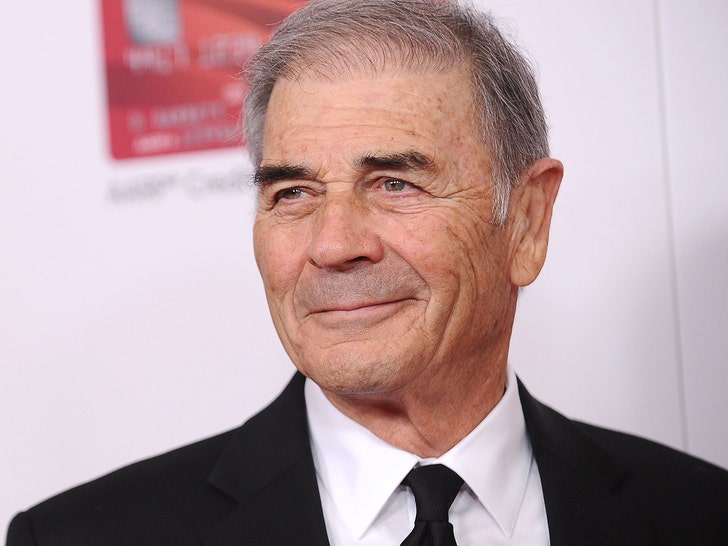
Robert Forster 13 juillet 1941 - 11 octobre 2019
Robert Forster, nommé aux Oscars en 1998 pour sa performance dans Jackie Brown de Quentin Tarantino, est mort vendredi 11 octobre à l’âge de 78 ans, a annoncé son attaché de presse à The Hollywood Reporter. Né à Rochester (Etat de New York), il est décédé des suites d’un cancer au cerveau à son domicile à Los Angeles.
Pour beaucoup, il restera Max Cherry dans Jackie Brown,
un personnage que Quentin Tarantino avait imaginé pour lui. Abonné aux
seconds rôles, il a été vu dans plus de cent films, dont Mulholland Drive de David Lynch et The Descendants d’Alexander Payne. Plus récemment, Robert Forster interprétait Ed dans la série à succès Breaking Bad et le film El Camino : A Breaking Bad Movie.
mercredi 9 octobre 2019
Pulp Fiction Locations: 25 years after
Le Los Angeles Mag a publié un très beau papier sur les lieux de tournage de Pulp fiction 25 ans après. Après Once Upon A Time In... Hollywood, c'est donc une nouvelle ballade dans un Los Angeles partiellement disparu que nous propose, indirectement Quentin Tarantino:
vendredi 4 octobre 2019
QT8: the First Eight
A journey through the films of Quentin Tarantino, narrated by the collaborators who know him best. QT8: The First Eight is coming to theaters for ONE NIGHT ONLY October 21st!
Get tickets now: bit.ly/QT8fathom #QT8
How Quentin Tarantino got the ‘60s sound for ‘Once Upon a Time in ... Hollywood’
For a
brief moment in his then-young rock career, Mark Lindsay lived in a
gorgeous home at the top of Benedict Canyon. The singer-songwriter,
co-founder of the group Paul Revere & the Raiders, moved there with
his buddy, record producer Terry Melcher, in the late ’60s. He wrote
some of his band’s best work there, including the single “Good Thing,”
which he penned on a piano in the living room.
Lindsay left the house when Melcher wanted to live with his girlfriend, actress Candice Bergen. They soon rented the place to director Roman Polanski and his wife, Sharon Tate.
What happened next in that living room inaugurated one of the darkest weeks in L.A. history. But Lindsay still remembers the place fondly, even if he did once bump into Charles Manson at a party there.
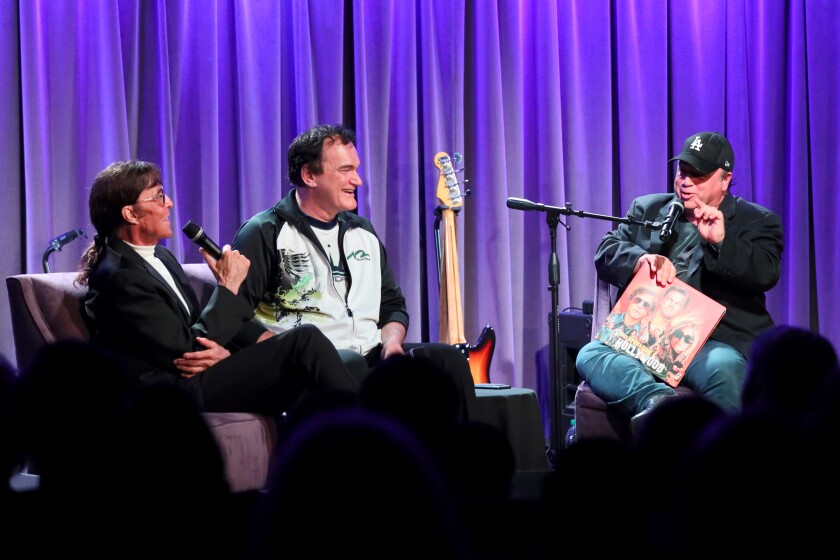
“Those two years were my golden years,” Lindsay said onstage at the Grammy Museum on Wednesday night in conversation with director Quentin Tarantino. “I remember drinking rosè in the garden with Terry outside in that liquid sunshine and saying, ‘it doesn’t get better than this’ and thinking it’ll never get worse. It didn’t until 1969.”
For director and L.A. native Tarantino, however, the coincidence is a thread that ties his whole film “Once Upon a Time … In Hollywood” together. All of his obsessions — vintage rock and roll, movie-business lore, darkly comic idylls cut through with horrific violence — wound through that property at the top of Cielo Drive (it’s now demolished, of course). He and Lindsay talked about evoking that golden era of L.A. rock radio in “Once Upon a Time …” and how it set the tone for the nightmare to come.
“Paul Revere & the Raiders was exactly the kind of band that would have rocked my little socks off,” Tarantino said of Lindsay’s pre-fab conceptual, velvety-voiced act. “And the reason Manson knew of Terry Melcher was because of Paul Revere & the Raiders.”
“Once Upon a Time …” was the rare original summer flick to best $100 million at the box office this year. The star-packed throwback follows a TV actor (Leonardo DiCaprio) and his loyal stuntman sidekick (Brad Pitt) through the wane of their careers in late-’60s L.A., all while something evil kindles in the canyons over the hill.
Throughout the film, Lindsay’s songs help set the hyper-specific tone of the era’s music — less the raw psychedelia of the tastemaking historians and more the amber hues of the innocence that Manson would soon shatter. Though Margot Robbie’s Sharon Tate pokes fun at the band in the script (“Don’t tell Jim Morrison you’re dancing to the Raiders!”), their slinky, creepy song “Hungry” plays as she meets her eventual killer for the first time in the driveway.
It’s by now no spoiler to say the film takes some liberties with the actual events the night of the Manson murders. But for Lindsay, Tarantino’s vigilant re-creation of the scene — down to the actual sheet music in the actual piano from the living room that night — was beyond uncanny.
“The room where Abigail Folger slept was my room,” Lindsay said. “It’s just like I’m back again.”
On Wednesday, even Tarantino’s conversation was peppered with such callbacks. Onstage, moderator David Wild, a rock journalist and Grammy scriptwriter, got a text from another favorite Tarantino soundtrack source, Neil Diamond, suggesting the director sync a few more tunes in his next project. Tarantino’s movies have always mined vintage rock for unexpected revelations and new contexts, ever since his impeccable use of Dick Dale’s “Misirlou” in Pulp Fiction.
“I want to be known for my discography as much as my filmography,” Tarantino said. When he’s picking soundtrack cuts, he joked that he imagines that “every director I know is in there going ‘Oh god, now I have to get out of the business’.”
“Once Upon a Time …” was a chance to marinate ever deeper in the era’s AM radio (especially the old L.A. station KHJ). Tarantino and music supervisor Mary Ramos unearthed around a full daytime block’s worth of recordings from the era for research — ad jingles, DJ patter and all. Drive-time radio wasn’t just a historical reference point in the film, he said, but a way to set the ambience in the eternal, doomed summer of ’60s L.A. at the margins of the movie business.
“There’s an L.A. quality to Brad Pitt’s character where he works in Hollywood but doesn’t live there,” Tarantino said. “He’s given his life to the entertainment business but doesn’t have anything to show for it. He drives home to Panorama City, and in that time you hear four songs, which gives you an idea of how long it takes to drive there.”
For Lindsay, the return to the stage has indeed been a long drive through a career that, if he hadn’t lived it, could have been scripted by Tarantino. It wasn’t all L.A. classic rock; Lindsay performed the synth score for the 1980 Japanese action flick “Shogun Assassin,” a favorite sample source for the Wu-Tang Clan and other rappers.
But on this night, he did his best to invoke the mood of “Once Upon a Time,” performing three songs from the movie with a choral ensemble from Orange County’s Tesoro High School.
Lindsay’s voice still had that velvety touch that made long, aimless drives through the Hollywood flatlands so moody back then. Tarantino almost always makes stars of his deep-cut soundtrack picks, but this was something else: an ever-rarer chance to hear the actual voice ringing through that house on Cielo Drive, back before everything went dark.
Source: Los Angeles Times
Inscription à :
Articles (Atom)